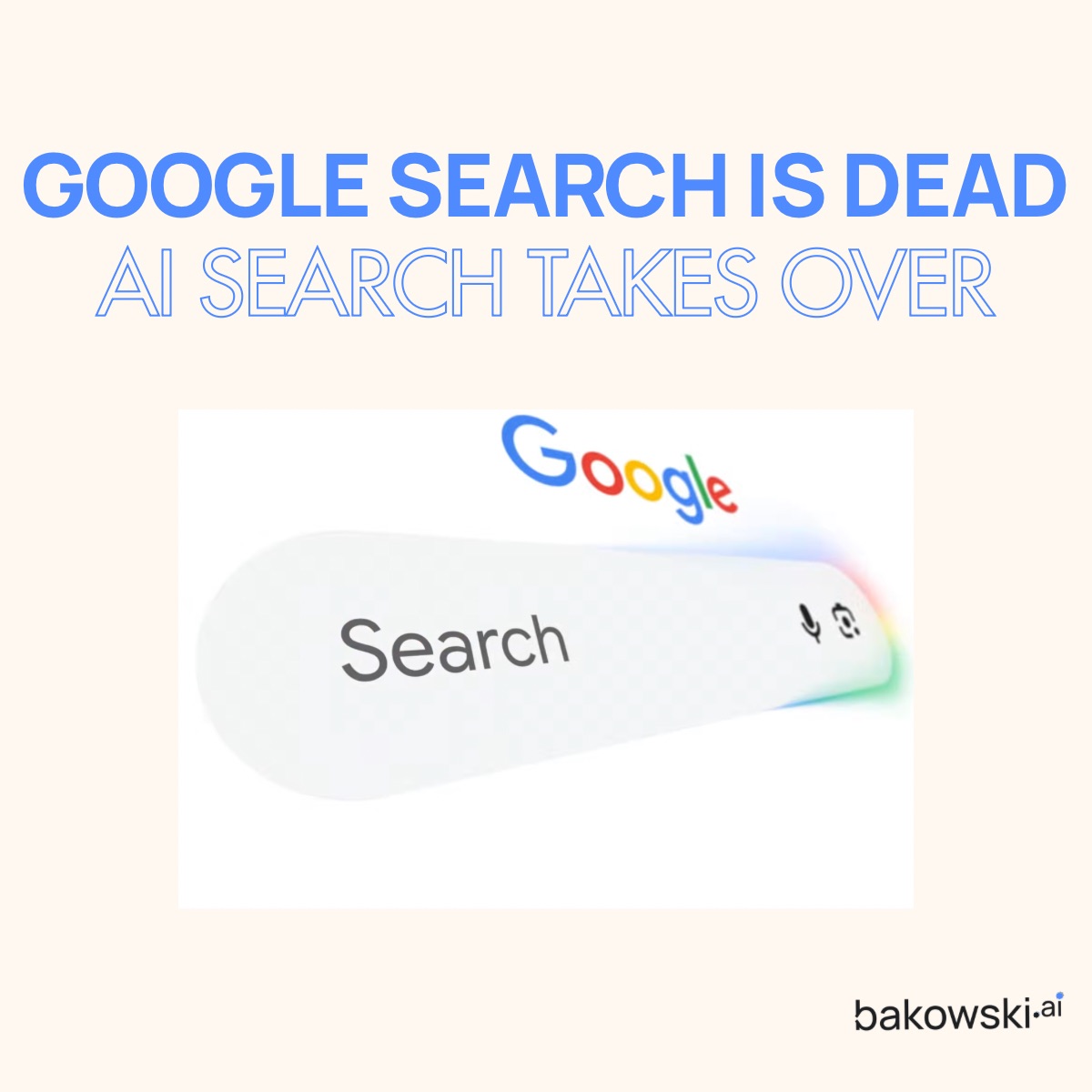
At Google I/O 2026, the company announced what it calls “the biggest upgrade to the Search box in over 25 years.” That’s not marketing language. That’s Google officially closing the chapter on keyword search – a model that shaped how the entire internet was built. Here’s what actually changed, and what it means for your business.
Google Just Admitted Keywords Were a Bad UX All Along
For 25 years, users learned to speak Google’s language. Not “where can I have a client lunch in Warsaw without waiting in line” – just “restaurant Warsaw center”. We compressed our questions into fragments because that’s what the tool required.
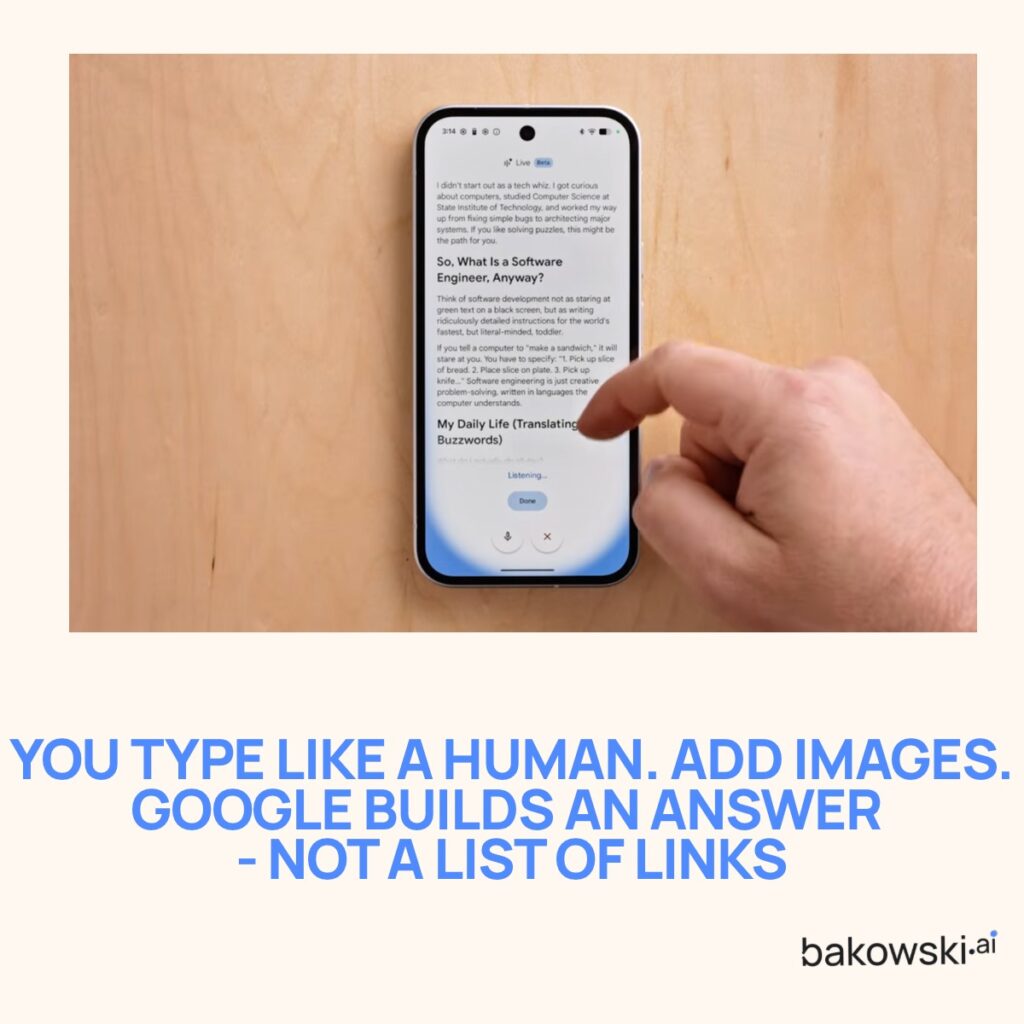
The new search box simply expands to accommodate longer, more conversational queries – without forcing users to choose a mode or format. You type the way you think. Google stops being a search engine and becomes an interface to information.
Users wanted this for years. Google couldn’t deliver it until now. The technology finally caught up.
The Turning Point: Numbers That Explain the Timing
Before getting into the specifics, some context that explains why Google moved now.
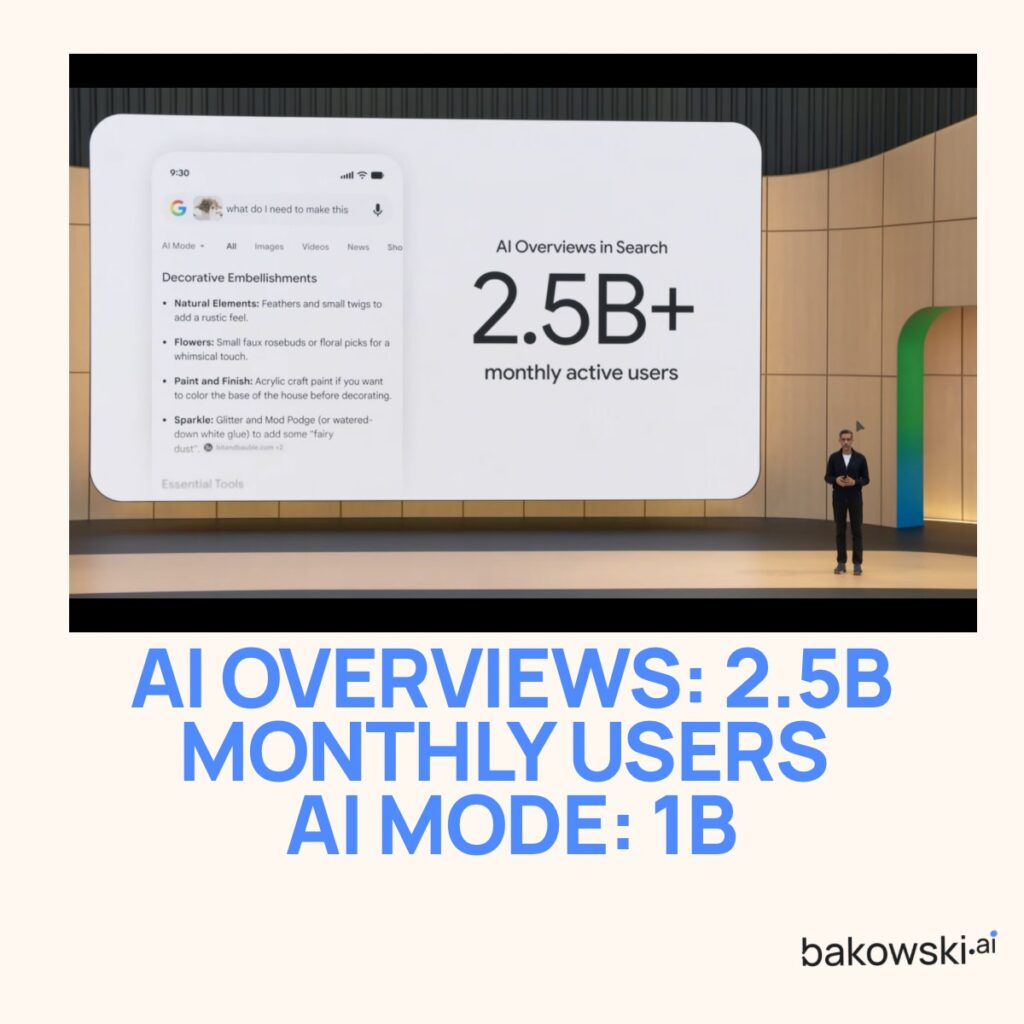
AI Overviews – the AI-generated summaries that appear above traditional results – now reaches 2.5 billion monthly users. AI Mode, launched just a year ago, has crossed one billion monthly users, with queries more than doubling every quarter since launch.
For comparison: ChatGPT had 900 million weekly active users as of February 2026. Google has more unique monthly users overall, but ChatGPT shows higher return frequency – meaning people come back to it multiple times per week.
This is a race. And Google knows it can’t play defense.
What Actually Changed – No Marketing Wrapper
Three things that matter in practice:
- New search box – multimodal input
Users can now include images, documents, videos and even open Chrome tabs as part of their search query. Ask about a company’s financials and attach their PDF. Ask for a recipe and drop in a photo of what’s in your fridge. This isn’t a future demo – it’s live globally, starting now. - Information agents – background monitoring
Starting this summer, users will be able to create and manage “information agents” that work in the background 24/7, tracking changes on the web and alerting users to new information. Google’s example: an agent monitoring market movements based on custom parameters.
Think Google Alerts 2.0 – except instead of keyword matching, the agent understands context and filters out the noise. - Generative UI – results as interactive tools
Search results are starting to look more like interactive web pages than a list of links. Google builds the interface on demand, depending on what you’re searching for.
What This Means for Publishers and Businesses
The shift carries significant implications for publishers and the broader web ecosystem. If Google’s AI can synthesize information and build interactive tools, the incentive for users to click through to source websites diminishes further. Referral traffic from Google Search has already been declining as AI Overviews expanded – and the new features are likely to accelerate that trend.
For SaaS, e-commerce, and content-driven businesses: SEO as “rank #1 on Google” is no longer the goal. The goal is being the source that AI cites and builds answers from.
Those who don’t understand this shift within the next 12-18 months will be optimizing for a system that no longer exists.
Google didn’t update its search engine. It changed the experience with users. For 25 years the experience was: “give me keywords, I’ll give you links.” The new experience is: “tell me what you want to achieve, and I’ll handle it.”
For founders and marketers, this isn’t a reason to panic. It’s a signal that investment in quality content, first-party data, and genuine expertise will pay off more than ever. AI looks for valuable sources. Be one of them.