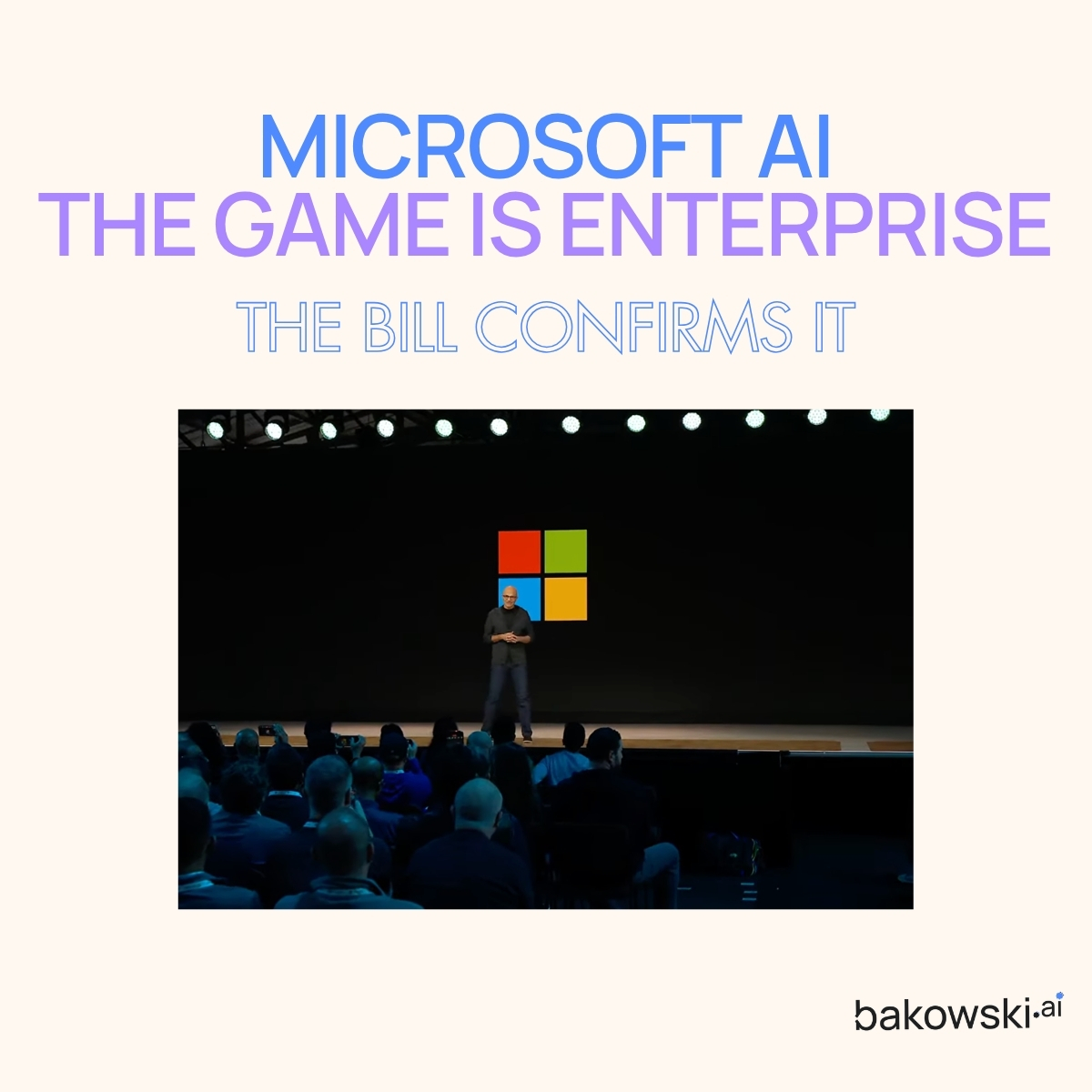
Microsoft Build 2026 had one central message: agentic AI is ready for enterprise. New tools, new architecture, new hardware. The direction is right – Microsoft is all-in on AI agents as the future of work. But buried in the keynote was something that didn’t get much stage time: the cost model. That’s the part that determines who actually deploys agents versus who walks away with a AI that is used by none.
First, a Fair Word About What Microsoft Is Getting Right
The direction is strategically sound. AI agents that autonomously execute tasks and collaborate with other agents aren’t hype – they’re the next stage of AI in business. At Build 2026 Microsoft also announced the Surface RTX Spark Dev Box – a compact developer PC with NVIDIA’s RTX Spark chip, 128GB RAM, 1 petaflop of AI compute, capable of running 120B+ parameter models locally without paying per API call. Hardware, software, infrastructure – Microsoft is thinking about the full stack.
Four Layers Microsoft Is Building Agents On
Build 2026 wasn’t a collection of disconnected announcements. It was a coherent architecture across four layers.
1. Microsoft IQ – The Organizational Intelligence Layer
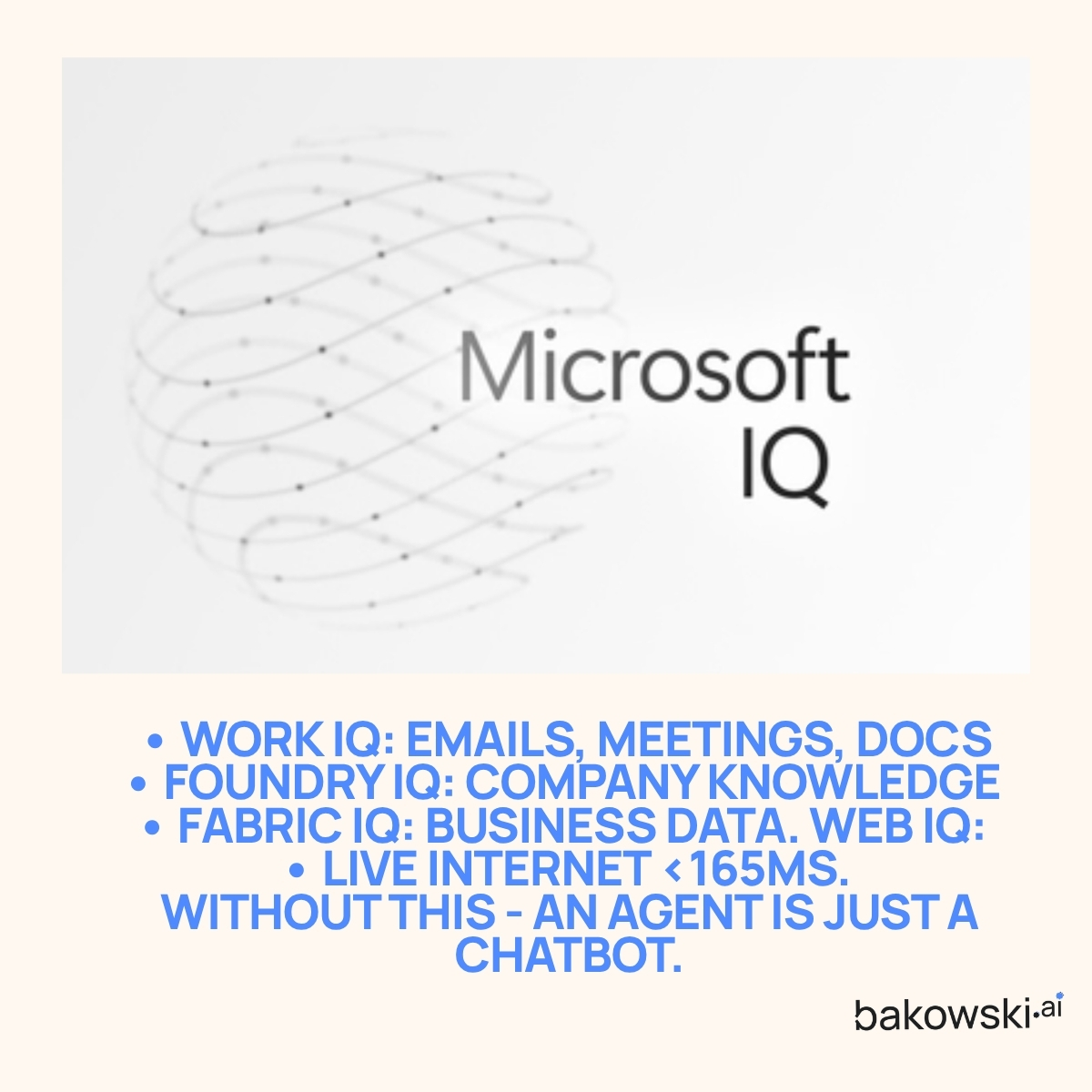
Microsoft IQ is a shared context layer for all agents in the Microsoft ecosystem – the company’s memory that agents draw from. Four components: Work IQ (emails, meetings, documents, relationships in M365 – GA June 16), Foundry IQ (databases, files, Azure SQL and external sources – GA now), Fabric IQ (structured business data and semantics), Web IQ (real-time internet data, sub-165ms latency). Without Microsoft IQ, an agent is a chatbot. With it, the agent understands how your organization works.
2. Scout and Autopilots – The Agent That Doesn’t Wait for a Prompt
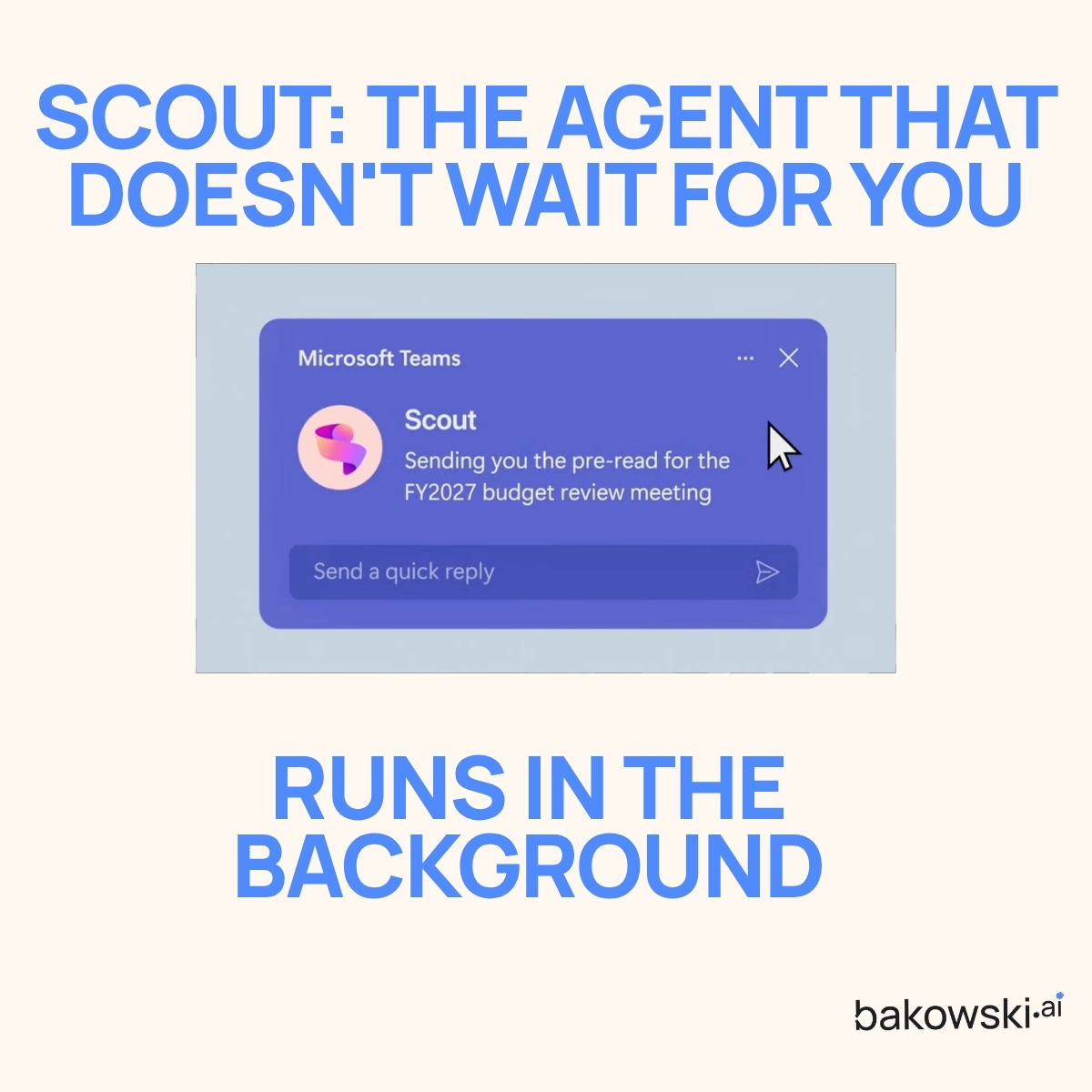
Scout is Microsoft’s first Autopilot agent – fundamentally different from previous assistants. It runs in the background without waiting for a user prompt. It has its own governed Entra ID identity, meaning every action is attributed to an auditable actor – not an anonymous service account. Connects to Teams, Outlook, OneDrive, SharePoint, and the local Windows desktop.
Practical example: ask Scout to prepare for your quarterly review. It scans Outlook, pulls data from Excel in OneDrive, drafts a PowerPoint, and schedules a Teams meeting – without you switching between a single app. Built on OpenClaw (open-source local AI agent framework). Available now through Microsoft’s Frontier Program. Requires: Frontier enrollment, Intune configuration, GitHub Copilot license.
3. MXC and the OS Layer – Windows as Agent Runtime
Microsoft Execution Containers (MXC), now in preview, create sandboxed environments for agents at the Windows OS level. Configure requirements once – Windows enforces them everywhere agents run. OpenClaw on Windows is the agent runtime integrated with MXC: the agent has its own identity, can execute code and access files – only within IT-defined security policies. For IT teams: no more manually configuring isolation for each agent.
4. MAI – Microsoft’s Own Models
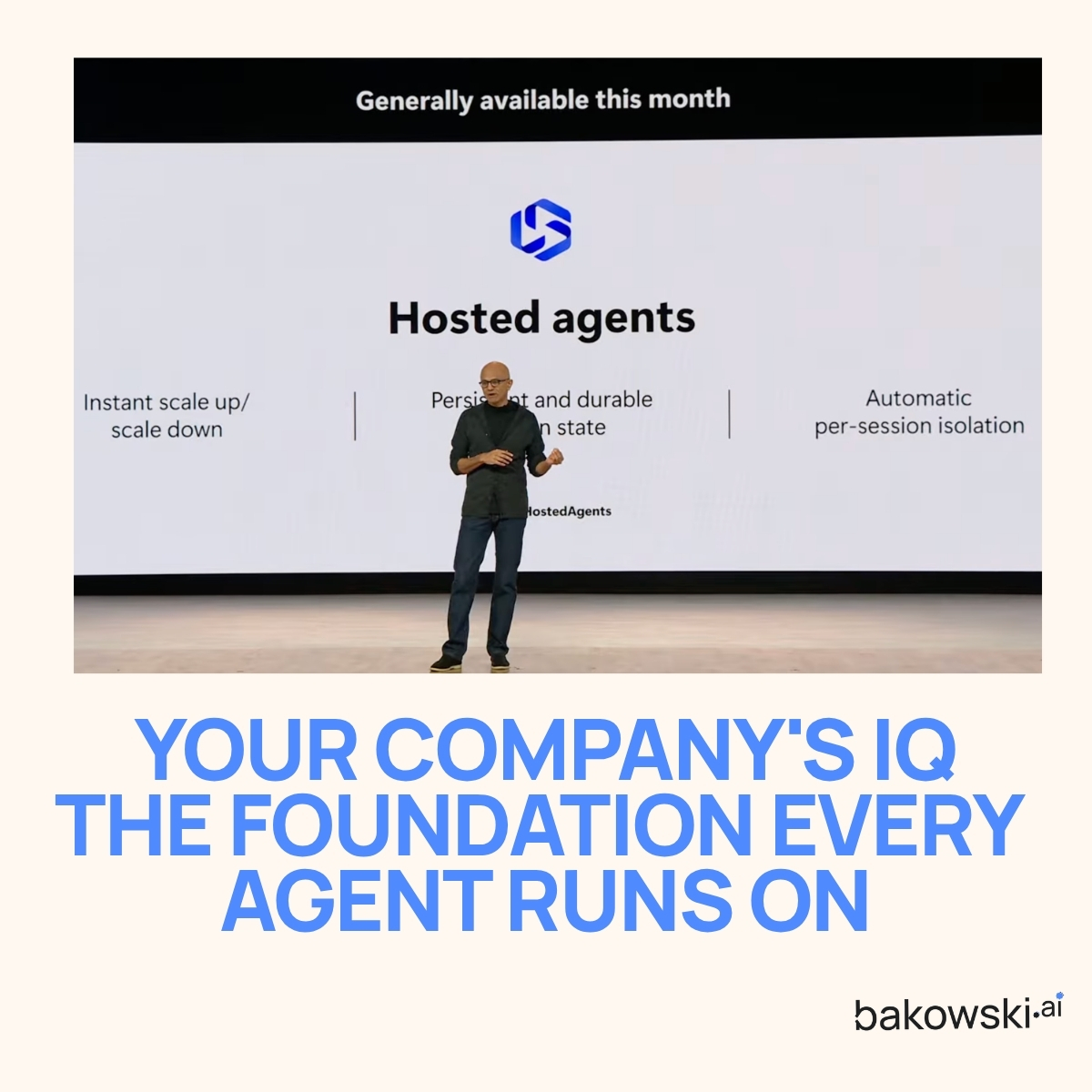
Microsoft launched 7 in-house AI models under the MAI brand. Flagship: MAI-Thinking-1 – Microsoft’s first reasoning model, trained from scratch on clean, commercially licensed data with zero distillation. Alongside this, Claude (preview) and GPT-5.5 (GA the next day) joined Foundry. Strategy: be the platform, not just the model provider.
5. Project Solara – An Android-Based OS for Agent-First Devices
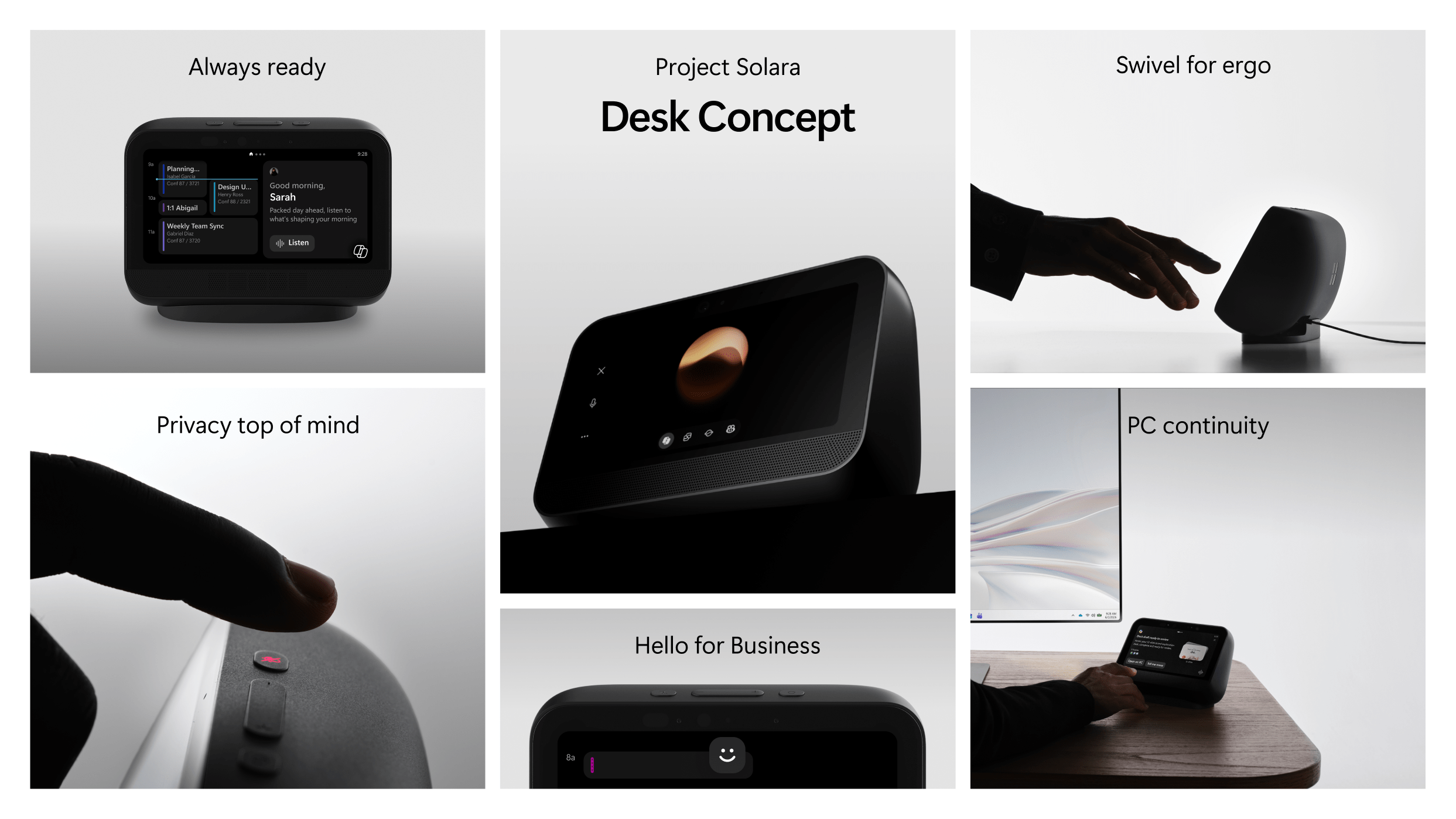
The boldest thing from Build 2026: Microsoft built a new operating system – not on Windows, but on Android Open Source Project (AOSP). Project Solara is a chip-to-cloud platform for devices where an AI agent is the primary interface, not apps. Building a new device category historically meant rebuilding the entire stack from scratch. Solara changes that – the agent dynamically adapts its interface to any screen or modality.
Two concept devices: a wearable AI badge on Qualcomm hardware and a desk companion on MediaTek silicon. Piloted with Best Buy, CVS Health, Levi’s, and Target. This isn’t consumer hardware – it’s an enterprise platform for companies building purpose-built AI devices. The devices act as windows into cloud-hosted agents, not standalone computers.
Copilot Credits – The New Billing Model for Agents
At Build 2026, Microsoft unified agent billing under Copilot Credits – credits burned every time an agent does something. Copilot Studio is sold as a tenant-wide license. Entry pack: 25,000 credits for €185/month (approx. €0.007 per credit). Key distinction: internal B2E agents for licensed Copilot users consume no additional credits. External agents (customer-facing, website, app) do.
The Hidden Bill – Over €6,000 Before an Agent Does Anything
Scout, Microsoft IQ, and the full agent platform are Enterprise-only – unavailable in Microsoft 365 Business plans, which are designed for companies up to 300 users and offer a simplified feature set without advanced compliance or agent management capabilities.
Copilot and agents aren’t standalone products. They’re add-ons requiring an M365 Enterprise base license. A quick guide to M365 Enterprise tiers:
- M365 E3 (€34.90/user/month) – standard enterprise package: Word, Excel, Teams, Exchange, basic security, Entra Plan 1.
- M365 E5 (€55.22/user/month) – everything in E3 plus advanced security (Defender, Sentinel), compliance (Purview), Power BI Pro. For regulated industries.
- M365 Copilot Enterprise (€26.00/user/month) – the add-on that unlocks AI in apps, agent access, and Microsoft IQ.
The numbers for 100 users on E3 + Copilot Enterprise:
| Component | Price | 100 users |
|---|---|---|
| M365 E3 (base) | €34.90/user/month | €3,490/month |
| Copilot Enterprise (AI add-on) | €26.00/user/month | €2,600/month |
| TOTAL BASE | €6,090/month |
Before an agent completes its first task – the organization pays over €6,000 per month. Annualized: €73,080.
E5 + Copilot: €55.22 + €26.00 = €81.22/user/month x 100 = €8,122/month before the first credit.
On top: external agents at scale. Five active agents across departments: estimated €2,750-5,500/month in Copilot Studio credits alone. Total for a 100-person company with a full agent platform: approximately €9,000-11,500/month. Plus Azure compute (Azure subscription required), Azure OpenAI tokens for advanced models, SharePoint Premium for document processing.
Where It Makes Sense, Where the Trap Is
Where it makes sense now:
- Organizations already on E3/E5 with Copilot – base cost is in budget, internal B2E agents cost zero additional credits.
- Internal automations: IT helpdesk, HR onboarding, knowledge base – immediate value, no extra invoice.
- Scout for E5 + Purview organizations – priority access and security environment already in place.
Where the trap is:
- Companies looking at €185/month for Copilot Studio without seeing the €6,000+ base underneath.
- External agents at any scale – every customer conversation burns credits.
- Fragmented invoicing – M365, Azure, and Copilot Studio arrive on three separate bills. FinOps Foundation State of FinOps 2026 (1,192 practitioners, $83B annual cloud spend) lists AI cost visibility as the number one challenge.
What This Means for Your Business
First: what do you already have. On E3/E5 with Copilot? Start with internal agents – best value-to-cost ratio available now.
Second: where are your end users. Agents for employees carry different economics than agents for external customers. Internal – included. External – the meter runs.
Third: who manages the AI budget. Copilot Credits is a meter. IT can set spending limits at tenant, group, and user level. Configure it before the invoices arrive.